


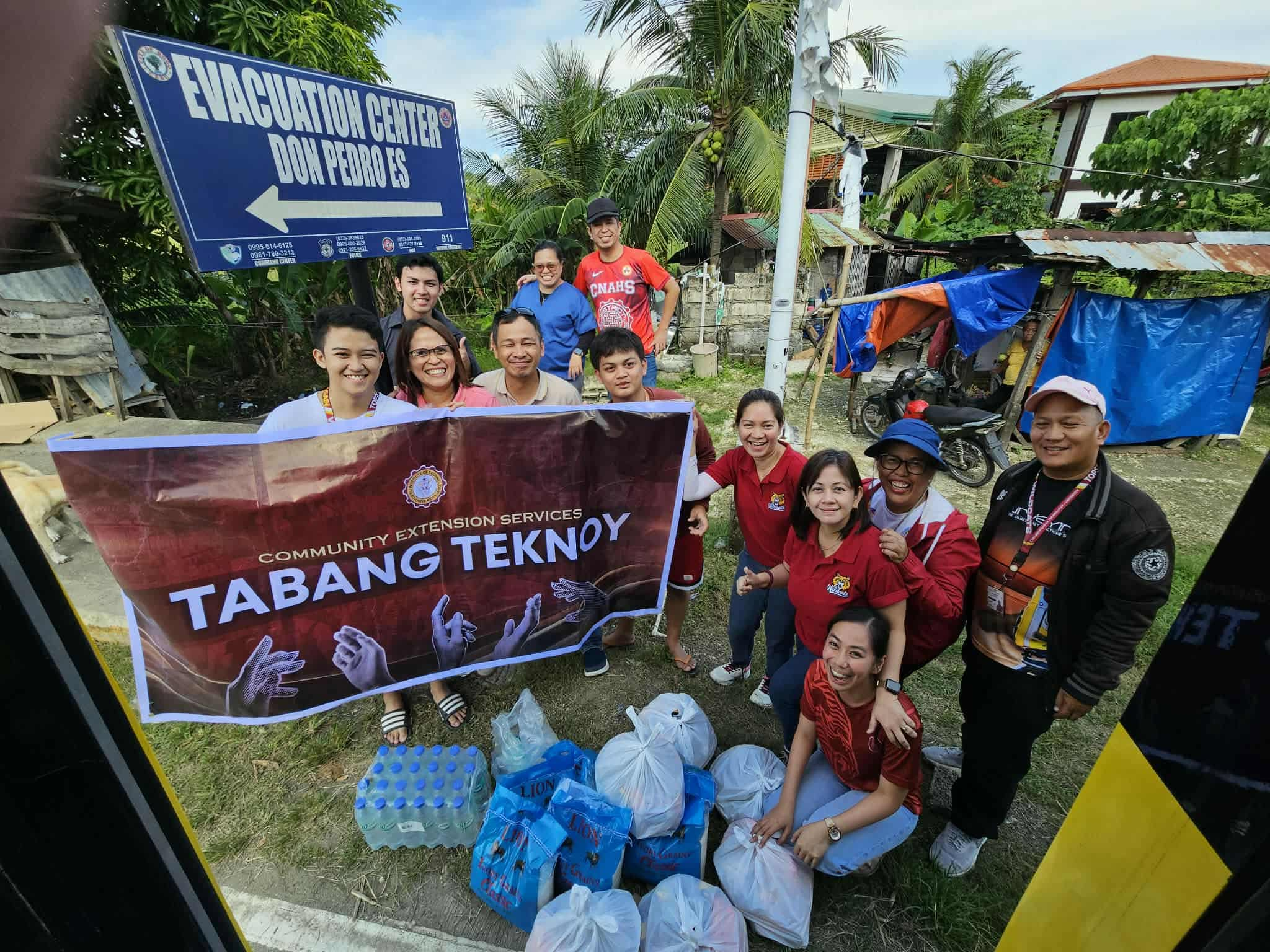
#TabangTeknoy Wave 2 brought relief goods, medical assistance, and psychosocial support to 150 families affected by the recent earthquake in Medellin, Cebu. Led by the CIT-U Community Extension Services (CES), the second wave of the university’s relief efforts demonstrated its commitment to community recovery and Good Health and Well-being.
Bringing Essential Relief to Medellin
On October 4, 2025, the CES team, headed by Dr. Luni Villacastin, traveled to Medellin early in the morning. Student and employee volunteers joined the mission to distribute basic goods to 150 affected families. Among the beneficiaries were CIT-U students and employees.
The relief distribution formed the central part of #TabangTeknoy Wave 2. The team provided essential supplies to families dealing with the immediate effects of the earthquake.
Providing Medical and Psychosocial Support
Beyond distributing relief goods, the mission addressed the physical and emotional needs of survivors.
Licensed psychologists and trained guidance counselors, led by Dr. Ronald Yrog-irog, conducted counseling sessions and offered psychosocial support. Their services helped survivors address the emotional challenges associated with the disaster.
Meanwhile, doctors from the CIT-U Medical-Dental Clinic provided health checkups and distributed essential medicines. The medical team included Dr. Arlene Creus, Dr. Alan Jorge Quirante, and Dr. Maria Luz Lumayno.
Through these services, #TabangTeknoy Wave 2 extended assistance beyond food and other basic necessities. It also recognized the importance of health care and emotional well-being during disaster recovery.
A Community United Through Donations and Volunteerism
The campaign remained open for donations until October 15, 2025. Contributions supported the purchase and distribution of food, drinking water, hygiene kits, and other essential supplies.
The initiative also highlighted the value of collective action. Donors, student volunteers, employees, health professionals, and counselors each played an important role. Together, they helped extend assistance to families in need.
Furthermore, the participation of CIT-U students and employees among the beneficiaries reflected the university’s connection with its own community and the wider public.
Advancing SDG 3 Through Community Extension
#TabangTeknoy Wave 2 reflected the principles of Sustainable Development Goal 3 (SDG 3): Good Health and Well-being. The United Nations recognizes health as an essential part of sustainable development. This includes physical, mental, and social well-being.
Disasters can disrupt daily routines and limit access to essential services. Survivors may also experience fear, uncertainty, grief, and stress. Psychosocial support can help them process these experiences and regain stability.
Similarly, medical checkups and access to medicines help address immediate health concerns. By combining these services with relief distribution, CIT-U responded to several dimensions of community well-being.
The initiative also demonstrated the importance of partnerships and community participation. Through organized volunteerism and professional expertise, the university mobilized its resources to support families affected by the earthquake.
Extending Compassion Through Coordinated Action
Ultimately, #TabangTeknoy Wave 2 showed that disaster response involves more than delivering relief goods. Effective assistance also considers health care, emotional support, and the dignity of affected families.
Through CES, student and employee volunteers, medical professionals, counselors, and donors, CIT-U brought coordinated assistance to 150 families in Medellin. The mission translated the principles of Good Health and Well-being into meaningful community service and reaffirmed the university’s commitment to helping communities recover.