


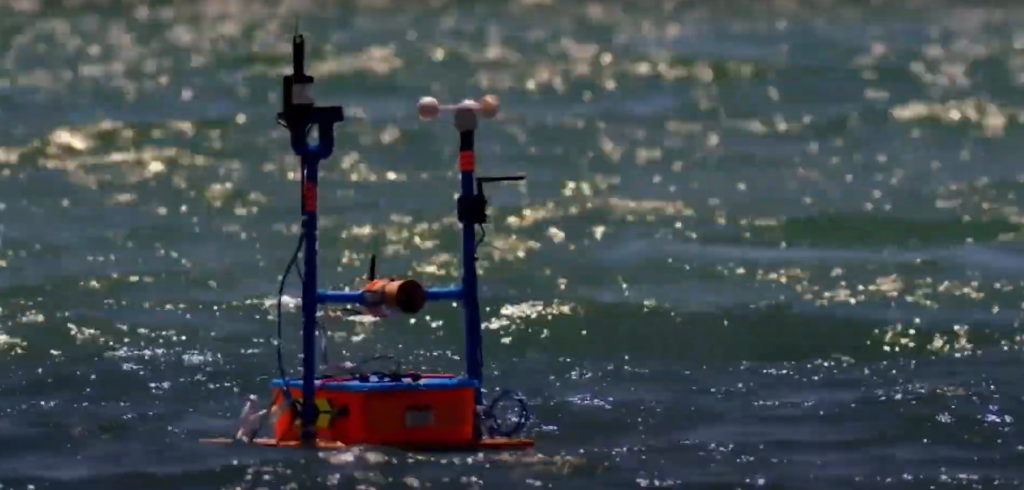
In another step towards innovation and sustainability, CIT University Computer Engineering students developed the SWAN Aquatic Drone Project, an unmanned surface vessel designed to monitor water quality by collecting real-time data using advanced sensors that measure pH, turbidity, temperature, and Total Dissolved Solids (TDS).
In scientific journals, the SWAN project has been identified as a midrange unmanned autonomous watercraft for search and rescue. This significant advancement helps address water quality concerns in aquatic environments like lakes, rivers, and seas. The device also has a drone that captures live video, allowing for thorough environmental monitoring.
The CIT University engineering students Ephrem Joseph Catane, Leary Gabutin, and Krishna Carla Tamosa worked under the supervision of Makerspace Manager Dr. Chris Jordan Aliac and MIS Director Dr. Larmie Feliscuzo. As stipulated in their academic research, “this study explores the integration of unmanned technologies into maritime Search and Rescue (SAR) operations.”
In alignment with the United Nations Sustainable Development Goal 14: Life Below Water, the project is focused on helping mitigate the impacts of human activity on marine ecosystems. The SWAN drone operates autonomously but can also be remotely controlled, with operators able to plot and monitor routes through an intuitive software interface.
Quoting project Ephrem Catane in his recent GMA International interview, he said, “The SWAN Project is just the beginning, and together we can safeguard our waters and our future.”
The students also expressed gratitude to CIT-U for its ongoing support and collaboration, which has significantly enhanced the project’s success.
Related SDGs: 4, 9