

Will I be ready when it matters most?
It’s a question many students carry quietly—especially as they approach graduation. With industries evolving faster than ever, the gap between what is learned in the classroom and what is required in the workplace can feel overwhelming.
At Cebu Institute of Technology – University, this challenge is not ignored—it is addressed head-on.
Through its latest partnership with IBM, students are given more than reassurance. They are given access.
Bridging the Gap Between Learning and Doing
For many students, the real struggle is not capability—it’s exposure.
How do you gain experience before your first job?
This collaboration introduces structured opportunities that allow students to step into real-world environments while they are still studying. Through industry engagements, career conversations, and hands-on training experiences, students are no longer left to navigate their future alone.
This initiative reflects the identity of a top Philippine university—one that does not simply deliver education, but actively builds pathways toward employment and professional growth.
More than just an academic experience, it becomes a guided transition from theory to practice.
A Partnership Formalized with Shared Vision
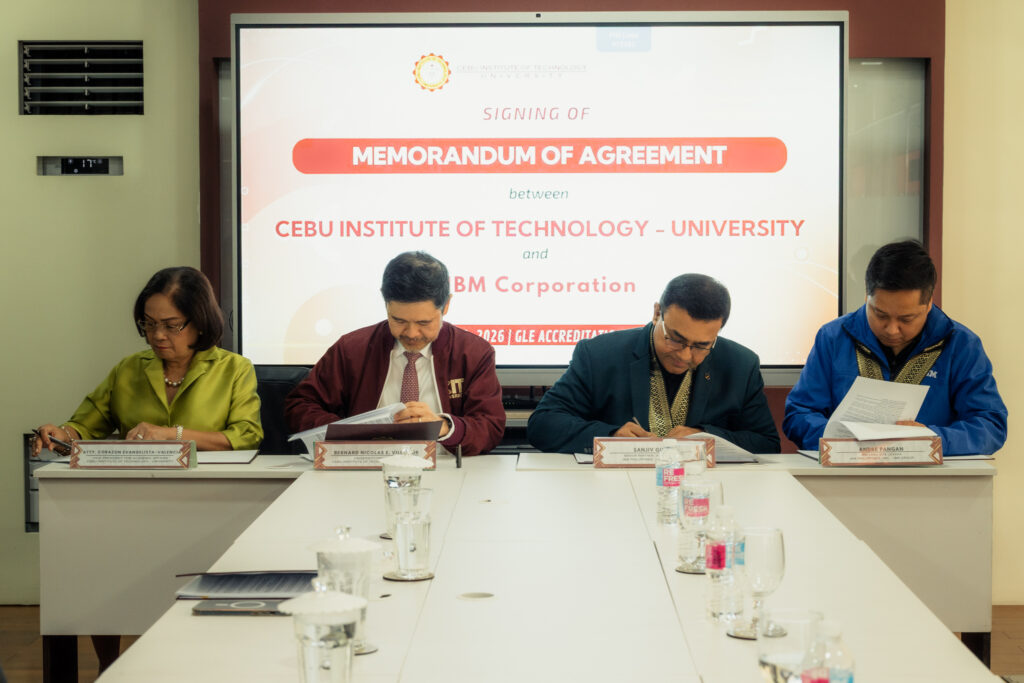
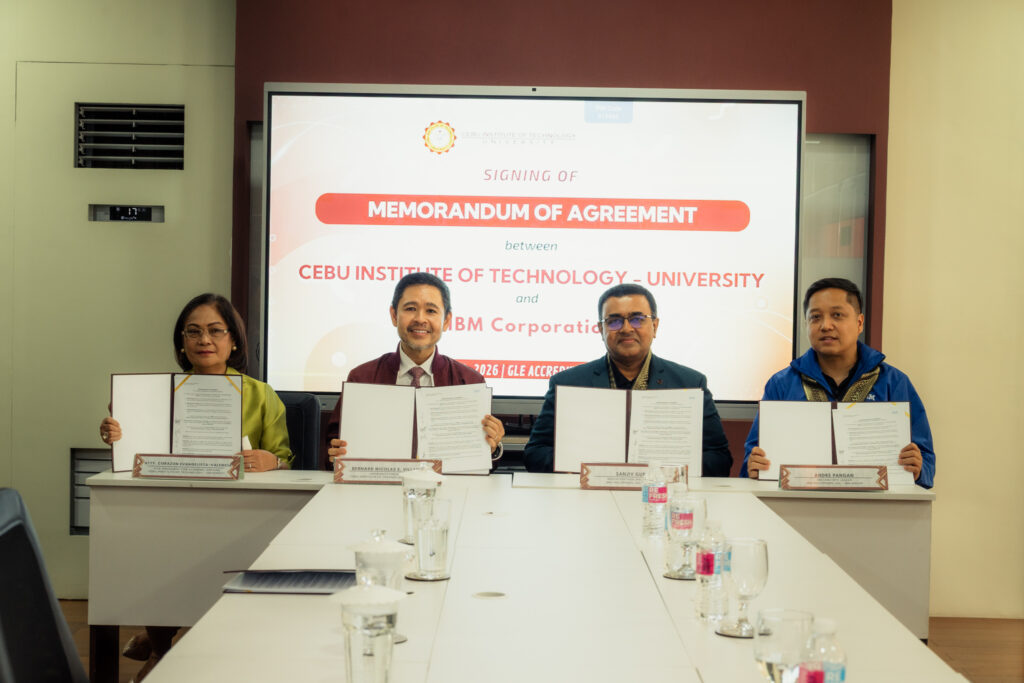
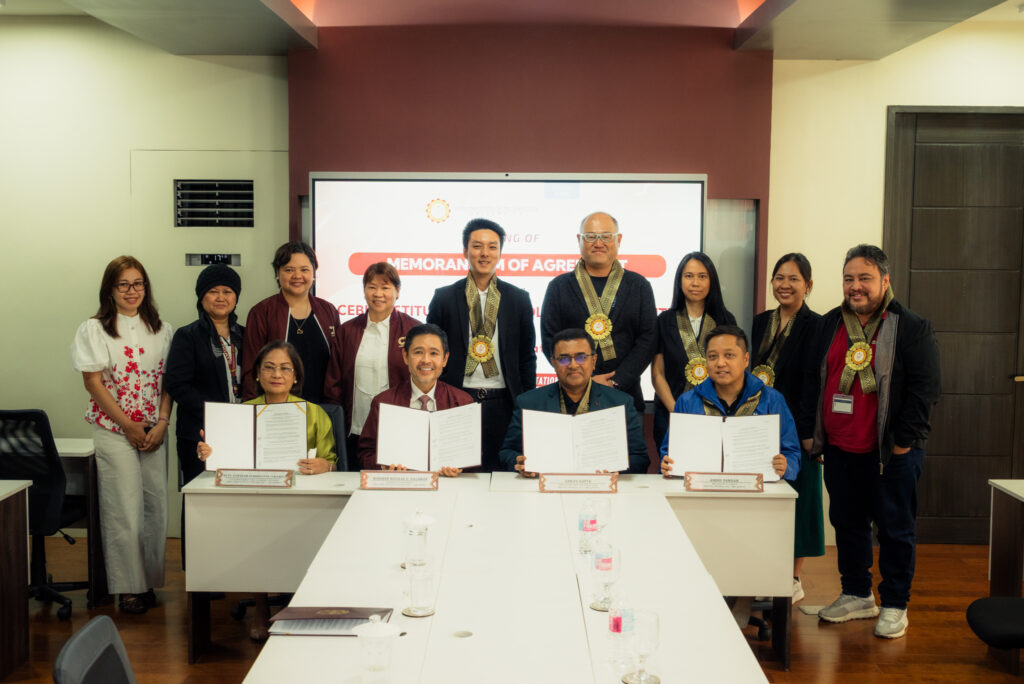
The Memorandum of Agreement was formally signed with leaders from both institutions who share a commitment to student success.
Representing CIT University were its President, Bernard Nicolas E. Villamor, and Vice President for Academic Affairs, Corazon Evangelista-Valencia.
From IBM Philippines, the agreement was represented by Sanjiv Gupta, Senior Partner and IBM Consulting FutureNow Center Philippines Leader, alongside Andre Pangan, IBM Cebu Site Leader of IBM Philippines, Inc.
This moment reflects more than formalities—it signals alignment in purpose, where education and industry come together to create real opportunities for students.
Real Opportunities, Real Growth
Students thrive when given the chance to apply what they know.
Through this partnership, learners are immersed in environments where they can observe, participate, and contribute. They gain insights from professionals, understand workplace expectations, and begin to see where they fit in the larger industry landscape.
This is where transformation happens.
At CIT University, opportunities are not left to chance. They are intentionally designed as part of a broader culture of excellence, where learning is continuously aligned with real-world demands.
Instead of asking, “What happens after graduation?” students begin to experience the answer while they are still in school.
A Learning Environment Built Around Student Success
Every student journey is different, but the goal remains the same—confidence in one’s readiness.
This is why CIT University positions itself not just as a top university, but as a guide that walks alongside its students from enrollment to employment. Partnerships like this strengthen that role, ensuring that students are equipped with both competence and clarity.
As an engineering university in Cebu, CIT has long been recognized for producing graduates who are technically strong and industry-ready. This collaboration with IBM further enhances that reputation by embedding real-world relevance into the student experience.
The result is a graduate who does not just understand concepts—but knows how to apply them.
Education with Purpose, Impact, and Responsibility
Beyond skills and employability, this partnership also reflects a deeper commitment—to prepare students who are responsible, ethical, and aware of their role in society.
By integrating industry exposure with values such as professionalism, accountability, and respect for information integrity, students are shaped not only as professionals, but as contributors to a larger purpose.
This aligns with CIT’s identity as an SDG University, where education is designed to support sustainable development, inclusive growth, and meaningful impact.
Built for What Comes Next
At its core, this partnership is about removing uncertainty.
It ensures that students are not left asking whether they are ready—but are instead given the tools, exposure, and confidence to move forward.
Because when education is aligned with opportunity, students don’t just graduate.
They step into the future prepared.