

Empowering lifelong learners to finally pursue the dreams they once set aside
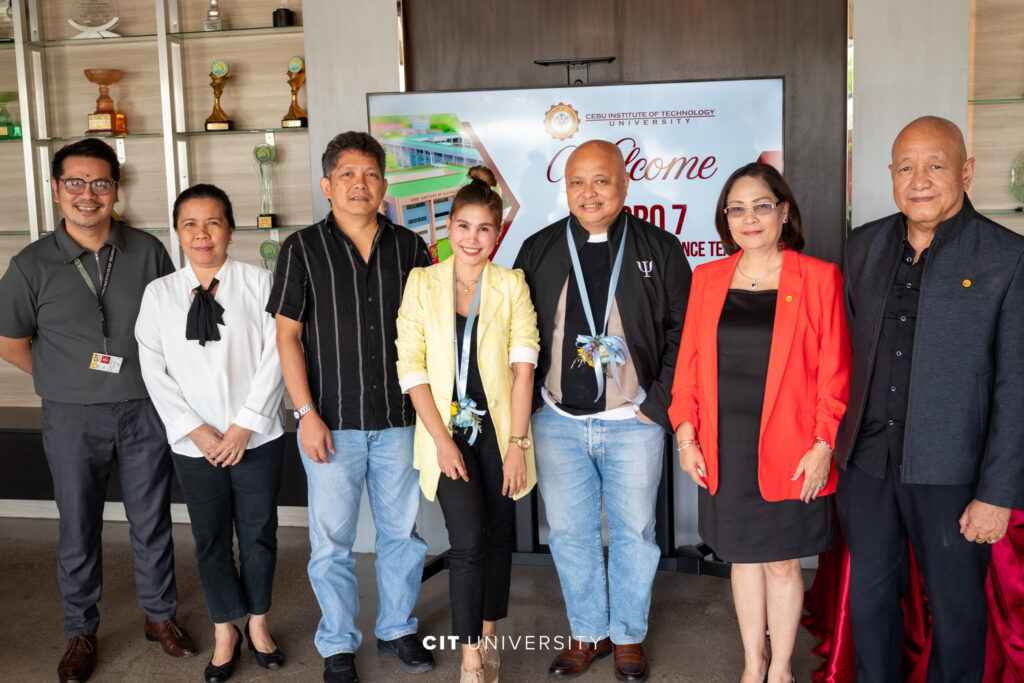
For many professionals, the dream of completing a college degree is often postponed by responsibilities, work, or life’s unexpected turns. At CIT University, that dream is being brought closer to reality as the Commission on Higher Education Regional Office (CHEDRO) 7 recently conducted an inspection visit of the AB English Language and BS Psychology programs in connection with the university’s application for deputization under the Expanded Tertiary Education Equivalency and Accreditation Program (ETEEAP). As a top Philippine university, CIT University continues to expand opportunities that make quality education more accessible to lifelong learners.
The visit forms part of the rigorous evaluation process that ensures programs meet national quality standards, opening opportunities for qualified professionals to earn a college degree through recognition of prior learning, work experience, and competencies. For many aspiring learners, this marks an important step toward finally continuing a journey that may have been paused—but never abandoned, reflecting the institution’s long-standing culture of excellence in delivering relevant and transformative education.
The Regional Quality Assessment Team (RQAT) was composed of Dr. Glenn Glarino, Dean of the School of Arts and Sciences at the University of San Carlos, and Dr. Mary Ann Malimas, Professor in the Department of Communication, Linguistics, and Literature at the same institution. They were joined by Dr. Leonardo R. Tanael, Jr., Education Supervisor for ETEEAP of CHED Regional Office VII, who accompanied the team during the inspection visit. CIT University was represented during the visit by Atty. Corazon Evangelista-Valencia, Vice President for Academic Affairs and Dr. Alexander Franco Delantar, the Director for ETEEAP, along with Dr. Nona B. Suerte, Dean of the College of Arts, Sciences, and Education and Chair of the Department of Languages, Literature, and Communication, and Dr. Ronald C. Yrog-irog, Chair of the Department of Humanities and Behavioral Sciences, where the AB English Communication and BS Psychology programs belong, respectively, further strengthening its reputation as a top university committed to academic quality and continuous improvement.
Continuing Education, Continuing Dreams
ETEEAP reflects a growing recognition that learning does not stop after leaving the classroom. Through this initiative, working professionals who have gained substantial experience in their fields are given the opportunity to convert years of learning into formal academic credentials. As an engineering university in Cebu that continues to expand programs beyond traditional pathways, CIT University recognizes that education must remain flexible and responsive to the realities of modern learners.
For individuals who once had to set aside their education, this development sends a clear message: it is never too late to return, grow, and move forward. CIT University continues to strengthen pathways for lifelong learning, encouraging individuals to stop postponing their goals and instead take the next step toward personal and professional fulfillment—an approach consistent with the values of an SDG University that promotes inclusive growth and meaningful opportunities for all.
This initiative aligns strongly with Sustainable Development Goal 4 (Quality Education) by promoting inclusive and equitable access to education for learners at different stages of life. By recognizing diverse learning pathways, the university supports continuous skills development that remains relevant in today’s evolving workforce, reinforcing the standing of CIT University as a top Philippine university that champions lifelong learning.
Supporting Career Growth and Inclusive Opportunities
By expanding access to degree completion through ETEEAP, CIT University also contributes to SDG 8 (Decent Work and Economic Growth). Graduates gain stronger credentials that enhance employability, open new career pathways, and enable professional advancement without requiring them to leave the workforce, sustaining the university’s culture of excellence in preparing professionals for meaningful careers.
Equally important is the program’s contribution to SDG 10 (Reduced Inequalities). Many professionals who were previously unable to finish their degrees due to financial, social, or personal circumstances are now given a second chance—ensuring education remains accessible and transformative for all, further affirming CIT University’s role as a top university serving diverse learners.
The successful progress of the application further demonstrates the value of collaboration among institutions and regulatory bodies, highlighting SDG 17 (Partnerships for the Goals) through the shared commitment of CHEDRO 7, academic experts, and CIT University in expanding educational opportunities for Filipino learners, strengthening its identity as an SDG University advancing partnerships for development.
A Culture of Excellence for Lifelong Learners
Recognized as a top Philippine university and as the ETEEAP deputization process progresses, the university looks forward to welcoming professionals who are ready to take the next step—those who have waited, paused, or set aside their aspirations, and are now ready to begin again.
Because some dreams are not meant to be left behind. At CIT University, they are meant to be completed.